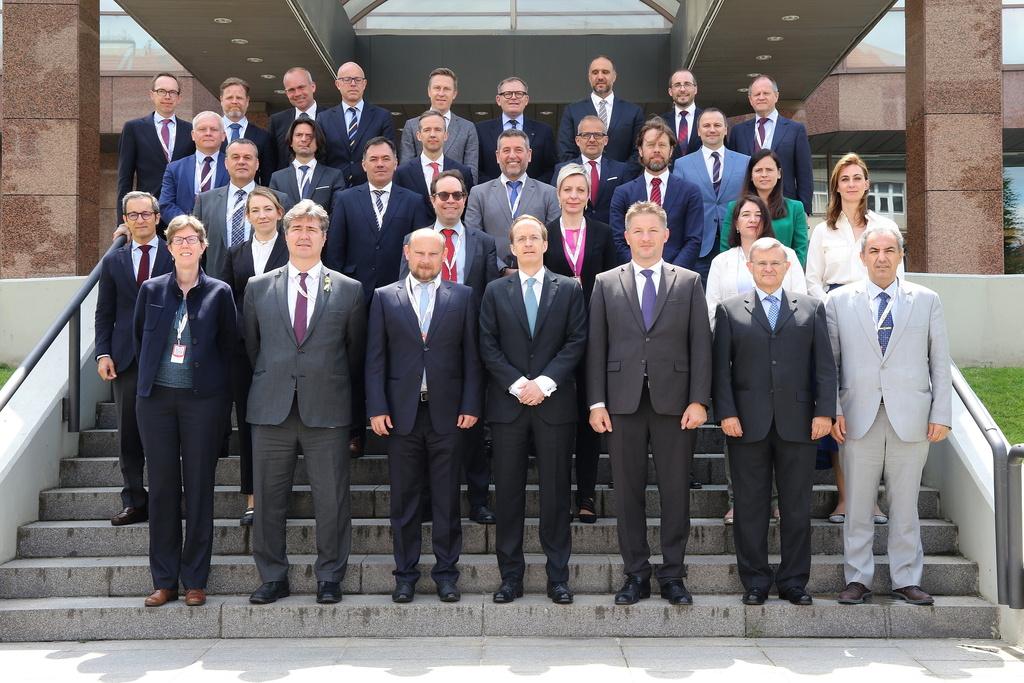
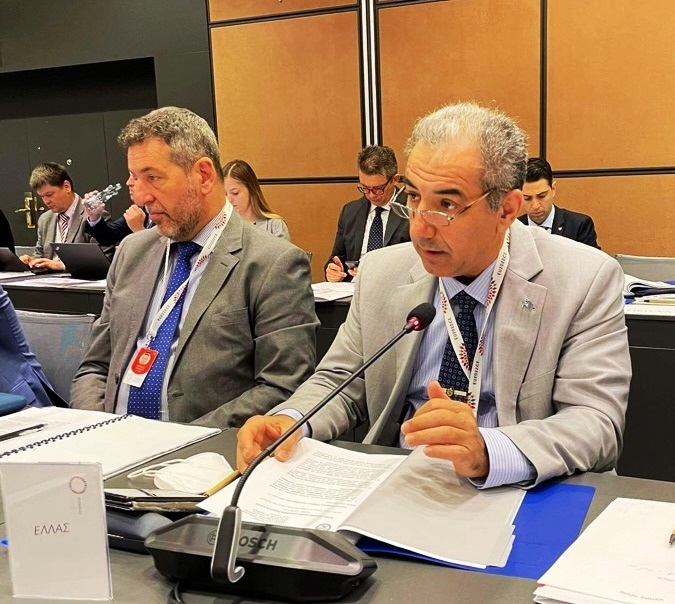
The General Director of National Defence Policy and International Relations of the Ministry of National Defence Dr. Konstantinos Balomenos, participated in the Informal Meeting of the General Directors of Defence Policy of the European Union (EU) held on 7 and 8 July 2022, in Prague.
The focus of the debate was the implementation of the EU Strategic Compass with a focus on investment in defence, as well as the EU’s role in Ukraine’s security and defence.
At the first working session on defence gaps in the EU defence sector, Dr. Konstantinos Balomenos in his intervention stressed that every investment actions should ensure the avoidance of unnecessary overlaps and strategic dependencies. He supported the most effective use of EU instruments and tools in order to boost defence investment and strengthen the EU’s Defence technological and industrial base (EDTIB).
In particular, Dr. Balomenos stated: “We understand that closing the gaps will also require incentives from the EU. It is important to preserve the incentive power of the European Defence Fund (EDF)”, and added that the proposal for a Regulation on a European Defence Investment Programme could serve as an important instrument for future development and procurement projects.
At the second working session, General Director, Mr Balomenos, expressed the view that Russia’s political brand would remain attractive to several authoritarian leaders and therefore it is equally important to address such a narrative. At the same time, he underlined that the use of the European Peace Facility (EPF) in the framework of Common Foreign Security and Defence Policy (CSDP) actions should be based on an integrated approach, including military expertise.
The proceedings of the meeting were concluded with a joint EU-NATO working lunch on the situation in Ukraine, the Balkans, as well as the cooperation of the two Organisations in the field of Military Mobility.
In addition, on the margins of the meeting, the General Director, Dr. Balomenos, met with his counterparts from Cyprus, Italy, Malta, Croatia, Slovenia, France, Spain and Portugal with whom he discussed issues of common interest as well as challenges and threats in the Mediterranean.