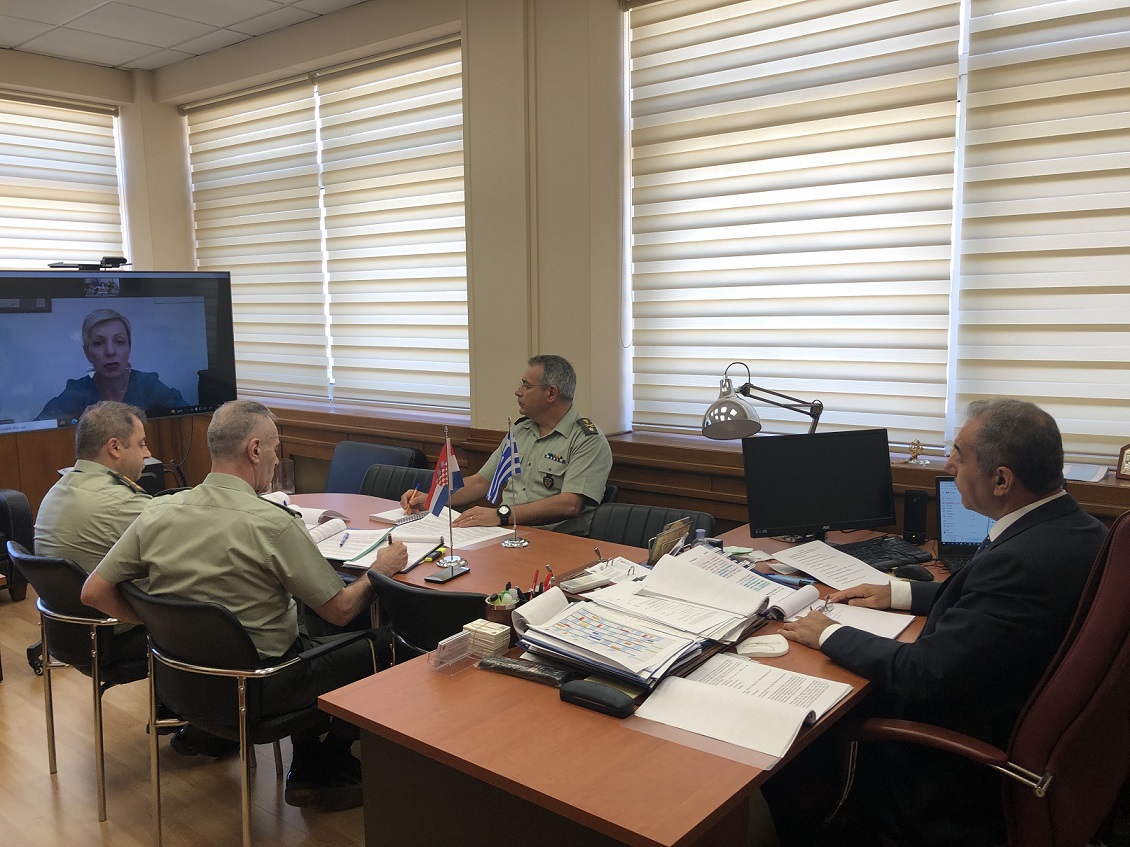
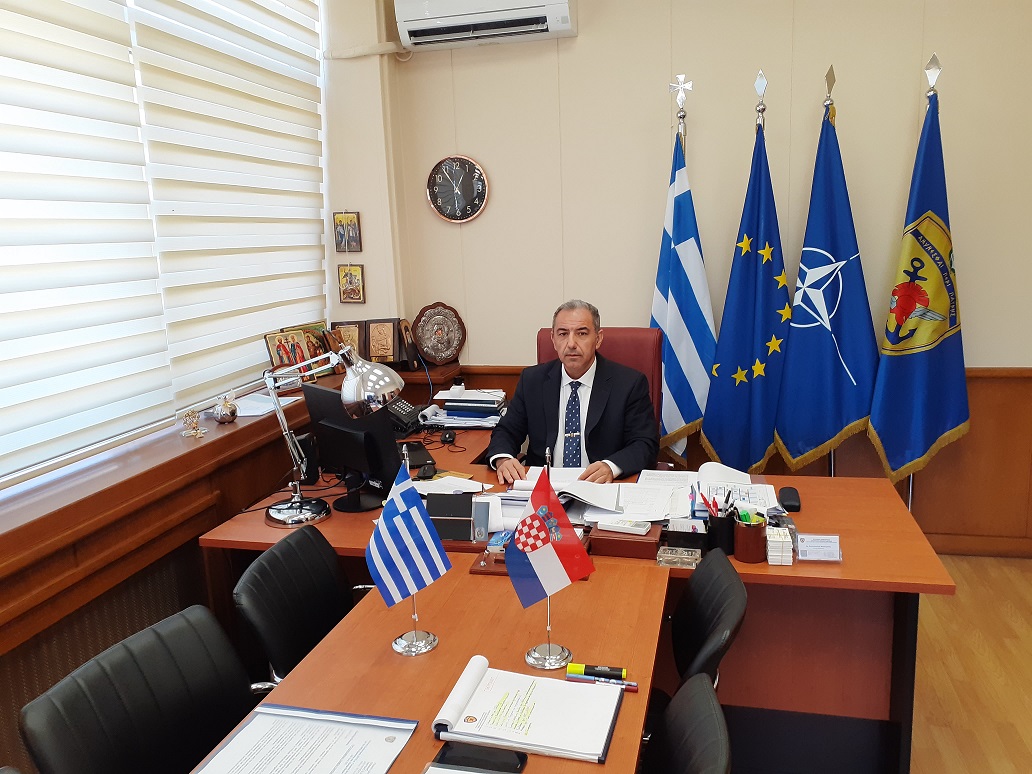
The General Director of National Defence Policy and International Relations of the Ministry of National Defence, Dr. Konstantinos Balomenos, in the context of the activities of the General Directorate for the strengthening of bilateral defence relations between Greece and Croatia, held a working teleconference (VTC) with the Director of Defence Policy of the Croatian Ministry of Defence, Mrs Dunja Bunjan Sujster, on 28 July 2022.
The main axes of the debate were:
• The impact of Russia’s invasion of Ukraine on the wider geopolitical environment of the Eastern Europe;
• The security situation in the Western Balkans;
• The implementation of the Strategic Compass within the EU with a focus on defence investment;
• The NATO Strategic Concept and the strengthening of cooperation between the EU and NATO;
• The assessment of the security situation in the Eastern Mediterranean;
• The analysis of common bilateral and security challenges;
• and the deepening of bilateral defence relations between Greece and Croatia.
In particular, in relation to the current situation on the Ukrainian front, Dr. Balomenos pointed out that developments in Ukraine fundamentally undermine European security and underlined that what is at stake is in reality the stability of Europe and the whole international order.
He also stressed that Greece condemns Russia’s revisionist actions that oppose the territorial integrity, sovereignty and independence of a State, as well as the brutal use of war force that costs the lives of many innocent people.
Finally, Dr. Konstantinos P. Balomenos pointed out that the consequence of the war is the creation of an unstable security environment in the Eastern European region, which the EU and NATO are called upon to address by developing relevant initiatives.
In relation to the situation in the Western Balkans, the General Director of National Defence Policy and International Relations of the Ministry of National Defence, Dr. Konstantinos P. Balomenos said that, at present, the overall security situation in the region is relatively stable, but the region faces a wide range of issues that require increased awareness and defence and security capabilities, adapted to new threats and challenges.
The General Director stated that Greece has been and will continue to be a strong supporter of the European perspective of the countries of the region which is a strategic goal, as well as as an important tool for promoting democracy, the rule of law and respect for fundamental rights, but also as an important instrument for economic development, through the integration and promotion of regional reconciliation.
Finally, it was noted that Greece continues to be a strong supporter of Operation ALTHEA in Bosnia and Herzegovina, in order to support Bosnia and Herzegovina’s authorities to consolidate stability and security in the country. For this reason, Greece will continue to support the European character of the Operation and the recruitment of staff for its implementation.
In addition, Dr. Konstantinos P. Balomenos, referred to the issue of the energy crisis, which has created many economic and social problems in all EU States, was informed about the impact of the crisis in Croatia and discussed with his counterpart Mrs Dunja Bunjan Sujster the possibility of exploring joint ways and measures to address it.
As far as the situation in the Eastern Mediterranean is concerned, Dr. Balomenos, briefly referred to the current security situation, focusing on the challenges and dangers in the wider region, and finally addressed Turkey’s destabilising role, which through its revisionist and extreme dangerous stance, both at the communication and operational level, affects the security and peace of the States of the region and the European Union in general.
In particular, the General Director, Dr. Konstantinos P. Balomenos pointed out that NATO should not only focus on Eastern Europe and the threat of Russia, but also on the southern wing of the Alliance, because there are also significant threats, such as illegal immigration, hybrid threats and terrorism, and consequently NATO’s strong presence in this region is required. From this point of view, Dr. Balomenos asked his counterpart Mrs. Dunja Bunjan Sujster to support this view on her country’s side within NATO.
Finally, regarding the consolidation of peace and security in the Eastern Mediterranean, the General Director, Dr. Konstantinos P. Balomenos, highlighted Greece’s role as a pillar of stability and peace through the promotion of Defence Diplomacy and its constructive regional cooperation — on the basis of international law, existing treaties and legality — with all neighbouring countries.
In relation to the implementation of the Strategic Compass in the framework of the European Union, the General Director, Dr. Balomenos stressed that the EU should be ready to make clear its position on the security of all its members. In this light, the four main chapters of the Compass are an excellent guide to joint initiatives by its Member States in the field of security and defence and provide clear guidance for realising the EU’s ambition to assume more responsibilities as a security provider and as a strategic global actor.
The working teleconference was concluded with an invitation from the Director of Defence Policy of the Croatian Ministry of Defence, Mrs. Dunja Bunjan Sujster to the General Director of National Defence Policy and International Relations of the Ministry of National Defence, Dr. Konstantinos P. Balomenos, for the continuation of the bilateral talks in October this year, in Croatia, in order to further strengthen the cooperation of the two countries in both the military and defence fields.