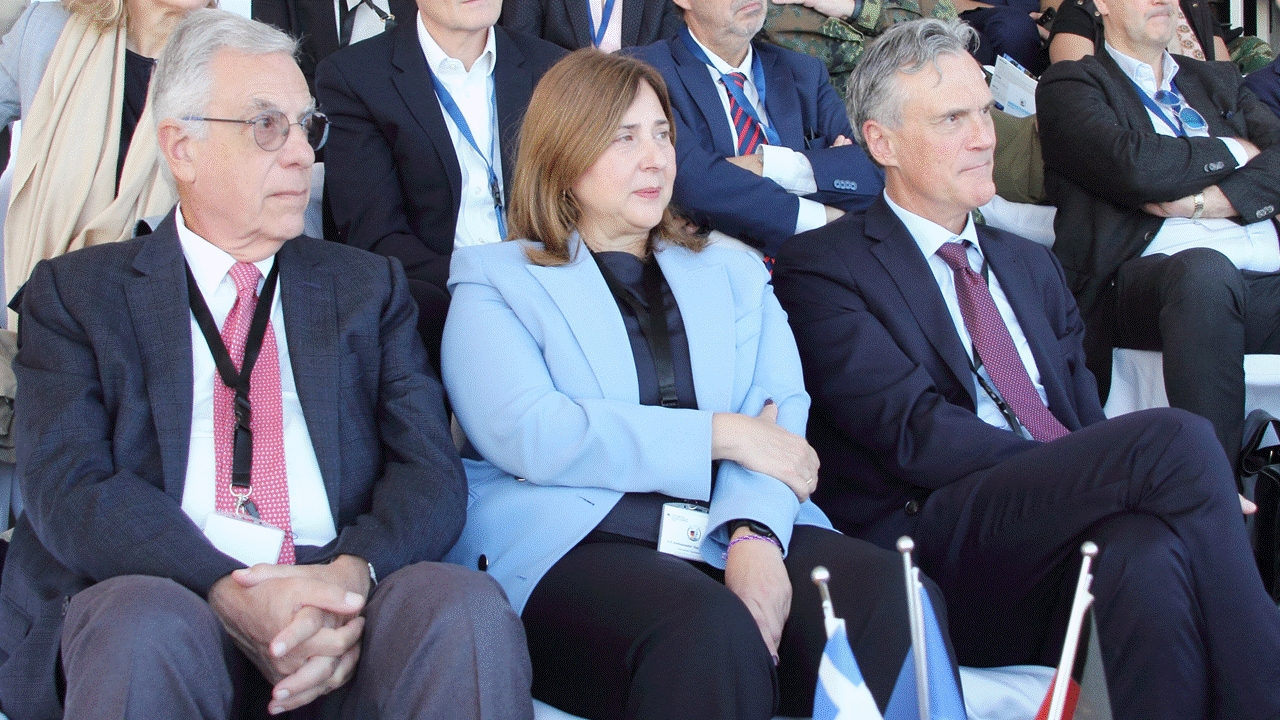
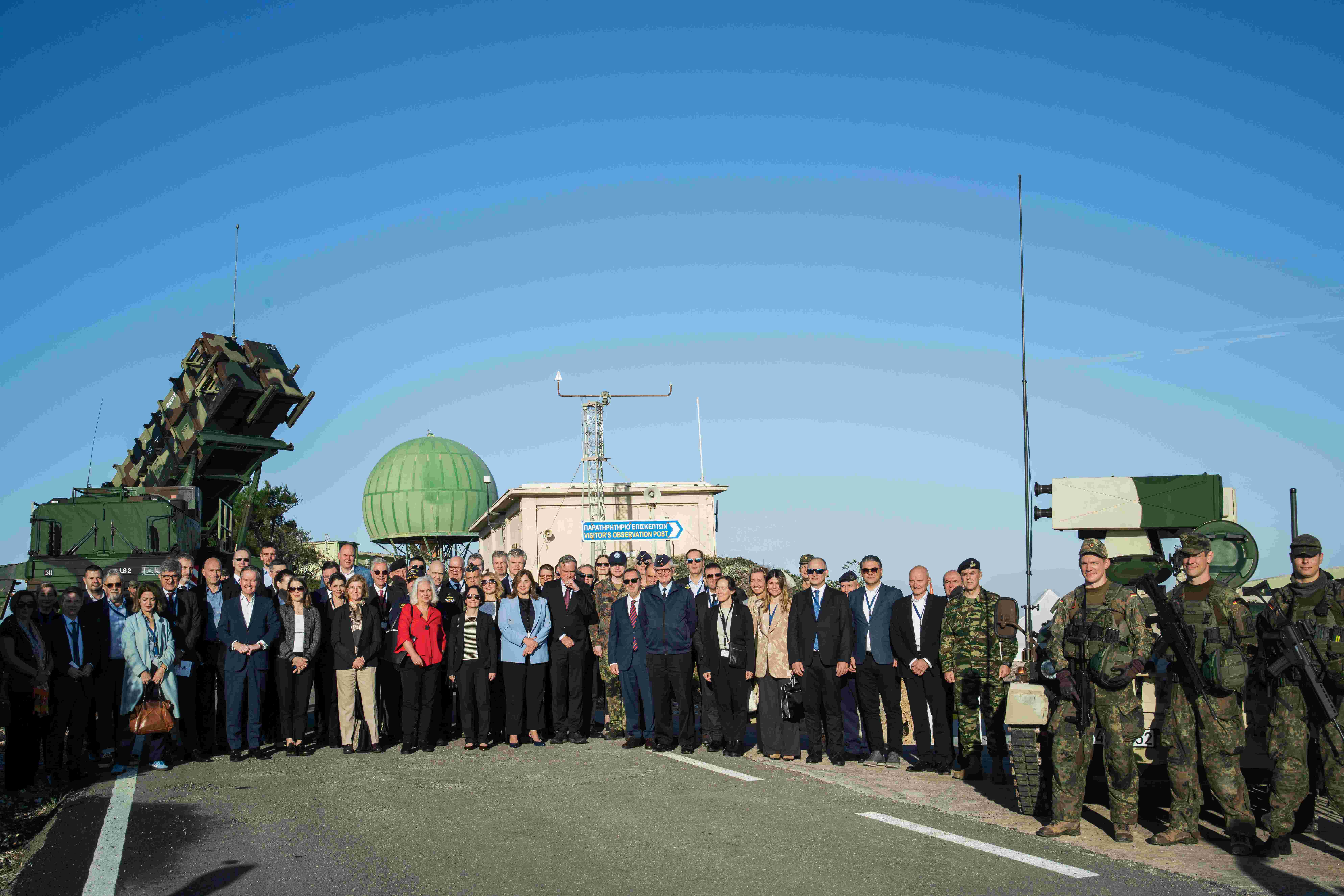
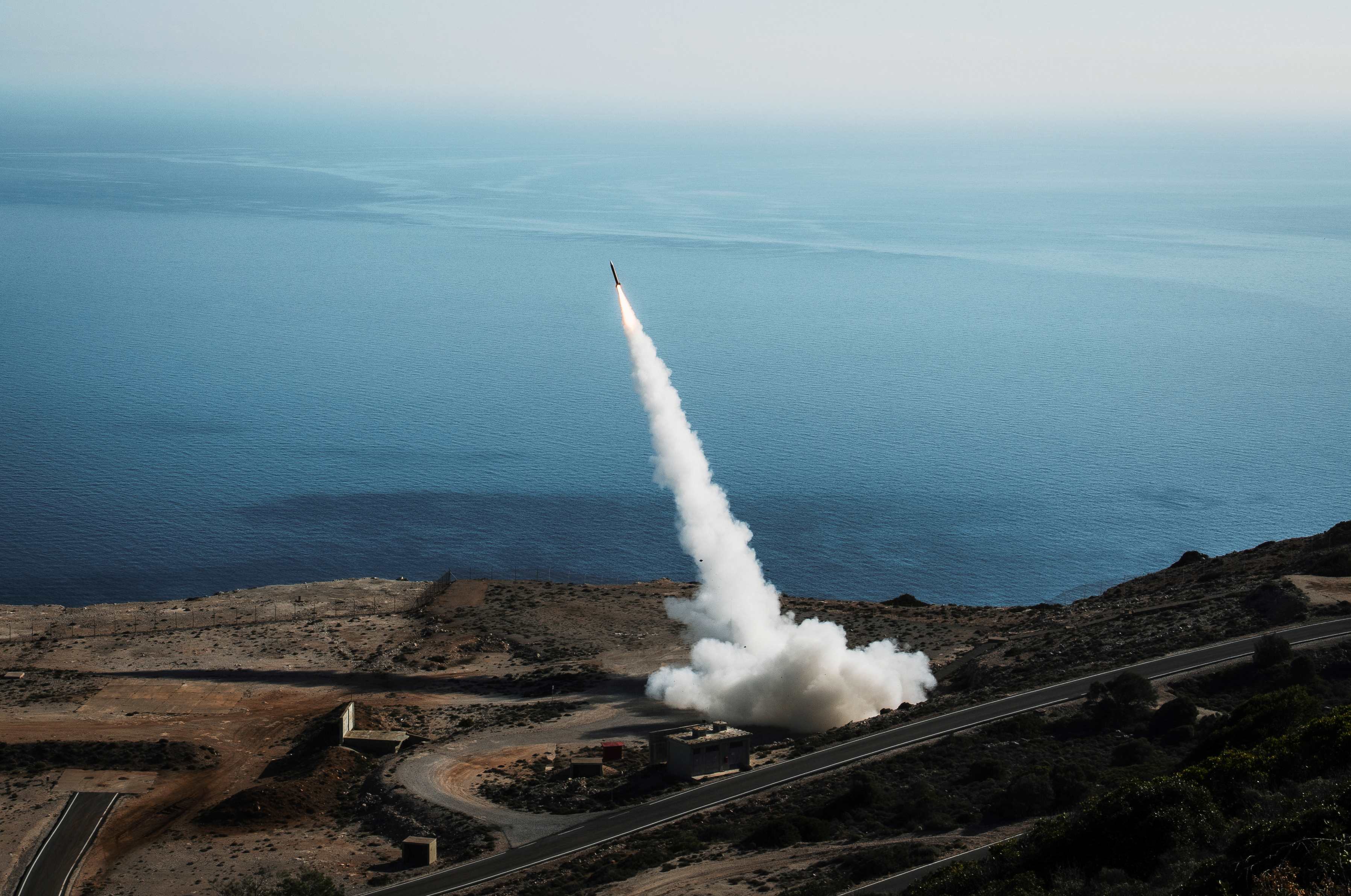
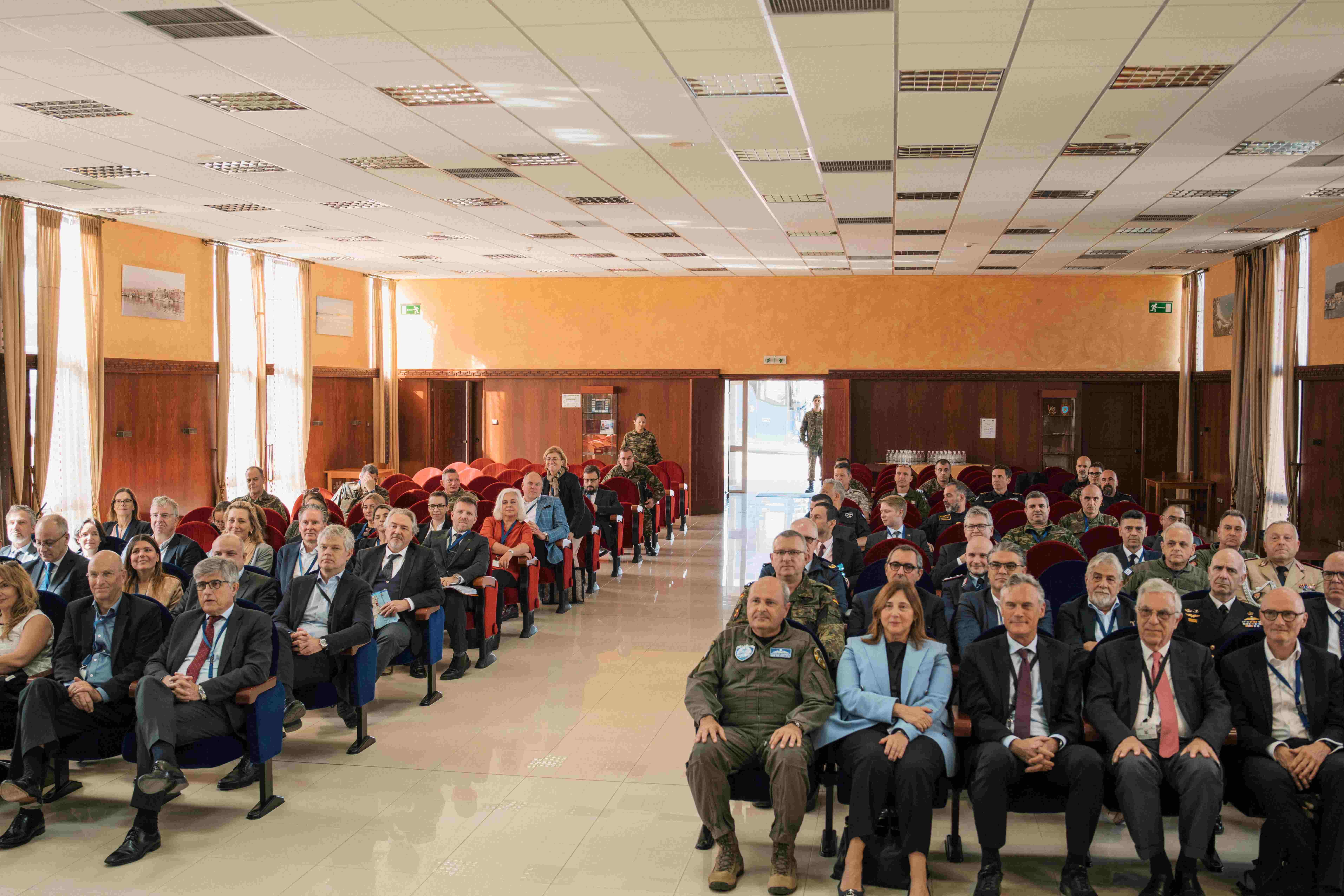
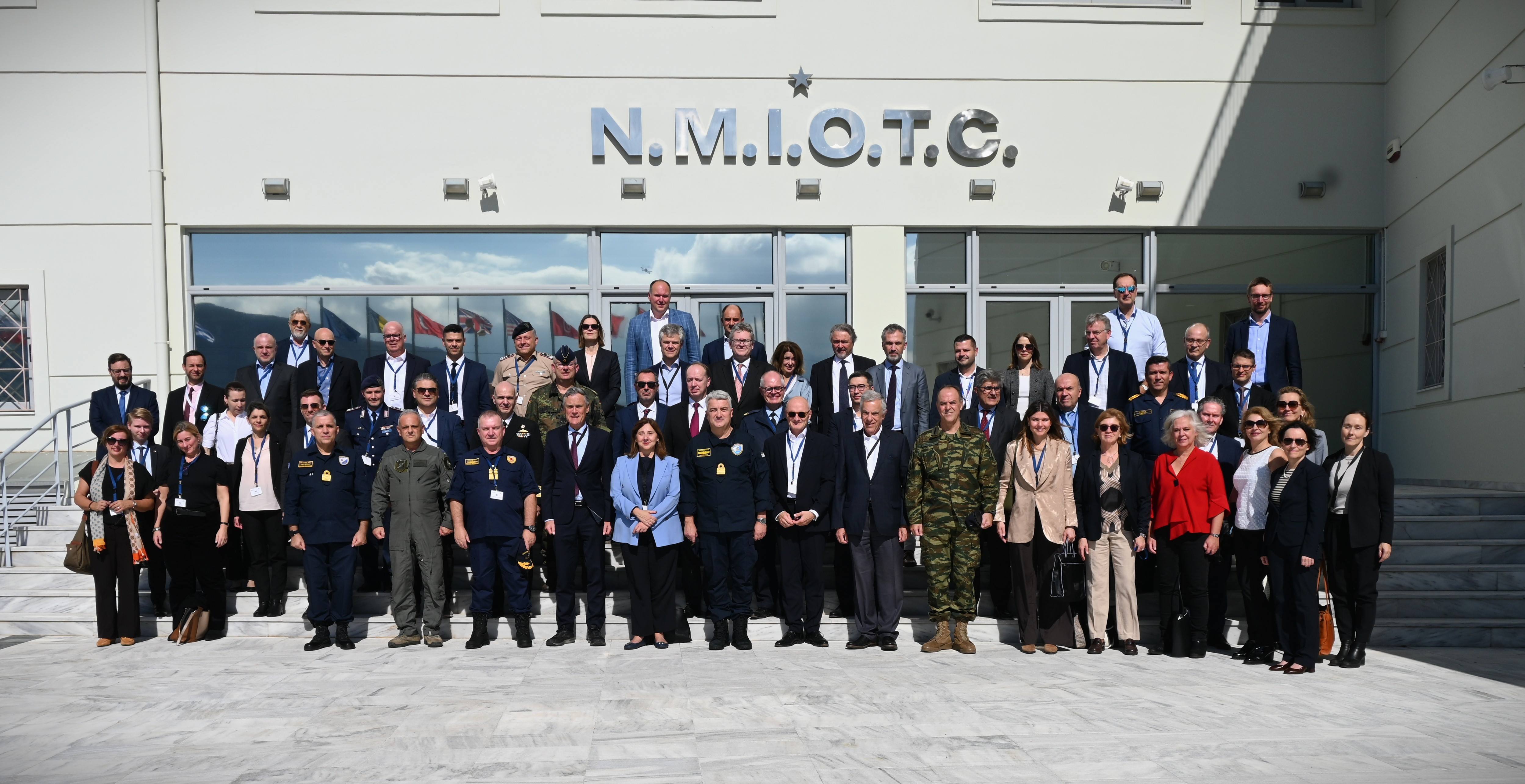
The North Atlantic Council visited military installations and services in Chania on Tuesday and Wednesday, 21-22 October 2025, with remarkable success.
The Greek and German Permanent Delegations to NATO jointly organised a programme that included, a tour of German Air Force installations and defence industry facilities in the city of Ulm on Tuesday, 21 October 2025, as well as a visit to the Chania region.
During its activities in Chania, the North Atlantic Council, was welcomed and hosted by Ambassador a.h. Michel Spinellis, Director General of the General Directorate of National Defence Policy and International Relations. Also present were Mr. Euripides Tsakiridis, Director of the Political Bureau of the Deputy Minister of National Defence, representing the political leadership of the Hellenic Ministry of National Defence; Vice Admiral Theodoros Mikropoulos, Deputy Chief of the Hellenic National Defence General Staff (HNDGS); and Major General (AF) Ioannis Chatzigeorgiou, Director of Integrated Air Defence of the Hellenic National Defence General Staff (HNDGS).
The primary objective of the visit was to monitor the live-fire demonstrations conducted by the German Air Defence Artillery Battery using the anti-aircraft/anti-ballistic PATRIOT missile system at the Crete Firing Range during the morning hours of Wednesday, 22 October 2025, to receive a comprehensive briefing on the capabilities of the Crete Firing Range, and underscore its crucial role in the Alliance’s operational training.
Following the conclusion of the firings, in order to highlight the utility, significance, and contribution of the training centres our country possesses in the wider Chania area, a visit and briefing ensued at the Integrated Air and Missile Defence Centre of Excellence (IAMDCoe), and the NATO Maritime Interdiction Operational Training Centre (NMIOTC). During these engagements, in addition to the summing-up, a demonstration of the provided training capabilities was also conducted.
Finally, a tour was held at the premises of the Allied sector of the Crete Naval Base.
The activity emphasised the importance of the region for NATO, particularly in terms of providing advanced, specialised, and integrated training in key defense domains of the Alliance. This includes anti-aircraft/anti-ballistic defence, naval deterrence operations, and logistic support for the Allied Naval Forces.