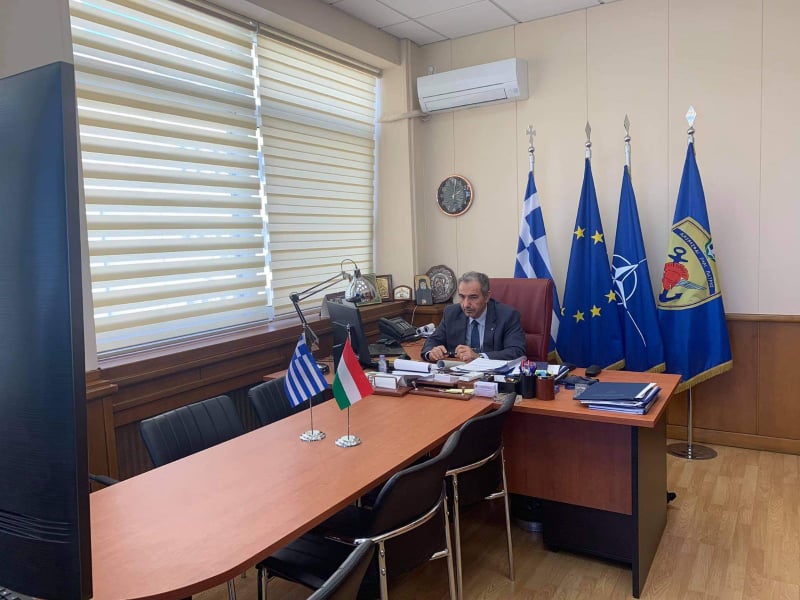
The General Director of the National Defence Policy and International Relations of the Ministry of National Defence, Dr. Konstantinos P. Balomenos, held a video conference with his Hungarian counterpart Dr. Gergely Németh on 27 October 2021, in the context of strengthening bilateral defence relations.
During the videoconference, the General Directors discussed the security challenges posed by illegal migration in the wider Eastern Mediterranean region, in particular following the situation in Afghanistan. Specifically, extensive reference was made to the possible effects that a new escalation of the migration crisis could cause, and was stressed the need for coordination and synchronisation of actions to tackle this phenomenon. On that issue, Dr. Balomenos pointed out the crucial role of Greece, which, due to its geography, is called upon to safeguard the EU’s borders, in the face of this threat. Dr. Balomenos also referred to the migration crisis in the Evros river region in March 2020 — when Turkey mediated the invasion of thousands of migrants/refugees on Greek/European territory — and extensively presented the crisis response process followed by the Greek authorities.
In this regard, the hybrid threats that the Eastern Mediterranean and Balkan states are confronted with by third parties have been extensively discussed. Particularly, Dr. Balomenos stressed the need to operationalise a holistic approach model to address them.
In addition, the geopolitical situation of the Western Balkans and the high importance of the stability and prosperity of the countries of the region were underlined. According to the joint positioning of the two Defence Policy Directors, synergies between the Balkan countries and the wider Mediterranean region in bilateral and multilateral formats, on the one hand, and as members of the European Union and NATO, on the other, shall be a key factor in supporting their resilience. The General Director of National Defence Policy and International Relations proposed to his Hungarian counterpart to explore holding further discussions, or synergies, between Greece and the four Visegrad countries (Hungary, the Czech Republic, Poland, and Slovakia).
The two officials examined ways to deepen defence cooperation at bilateral and European level with joint participation in PESCO projects etc. The prospect of developing cooperation on hybrid threats and other challenges faced by the two countries was also discussed.
The bilateral contact took place in a very warm climate, confirming the strong bonds of friendship between the two countries.