
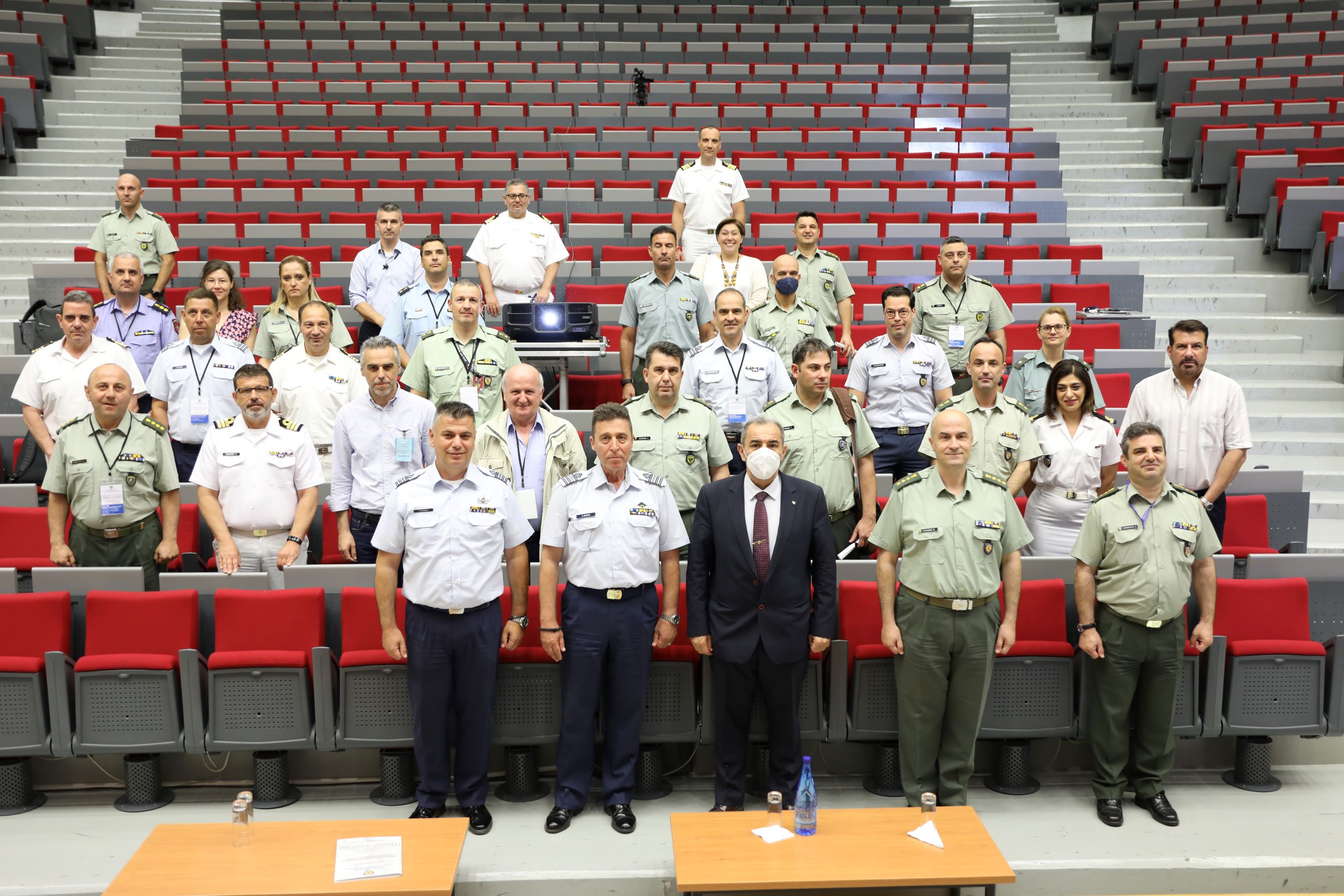
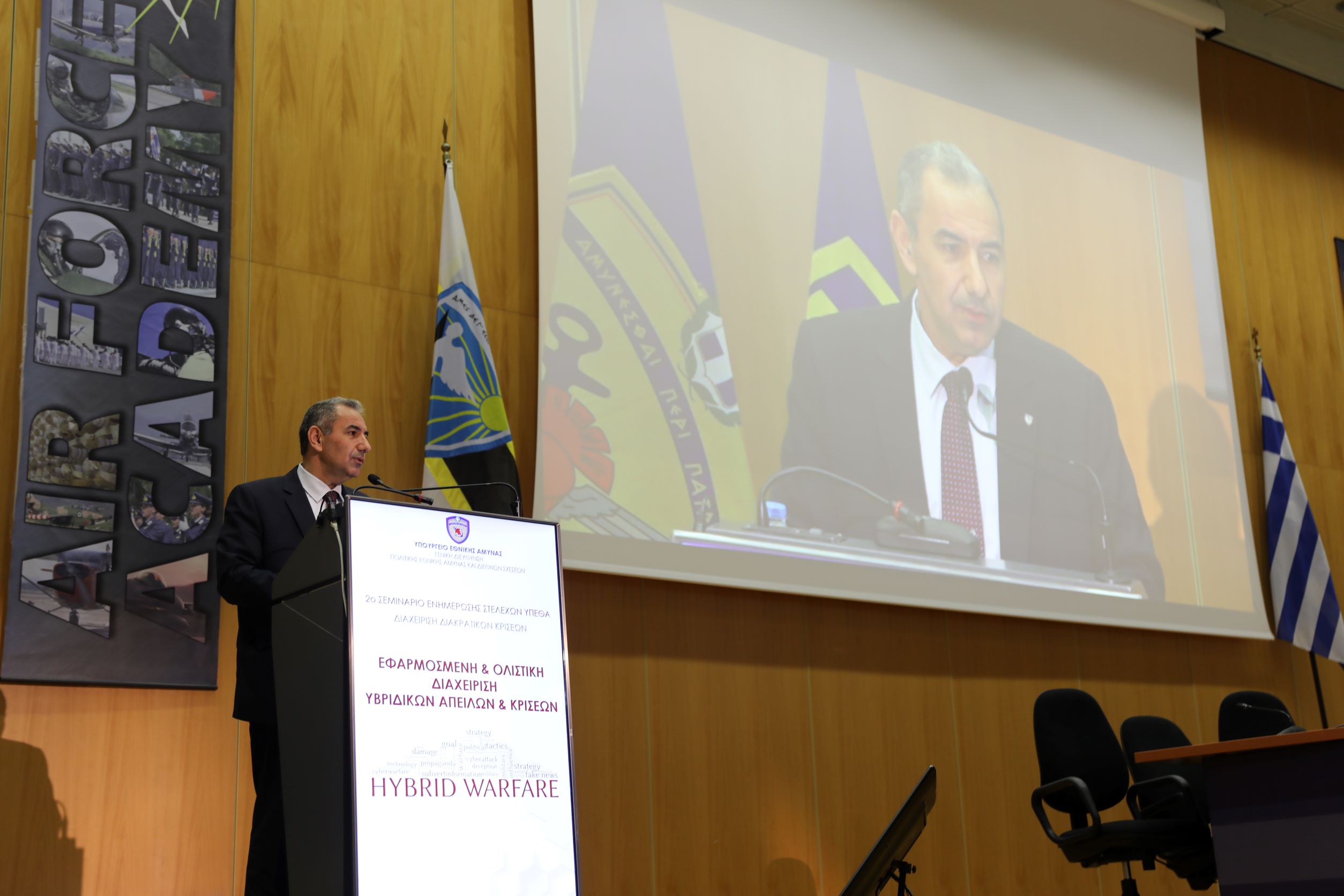
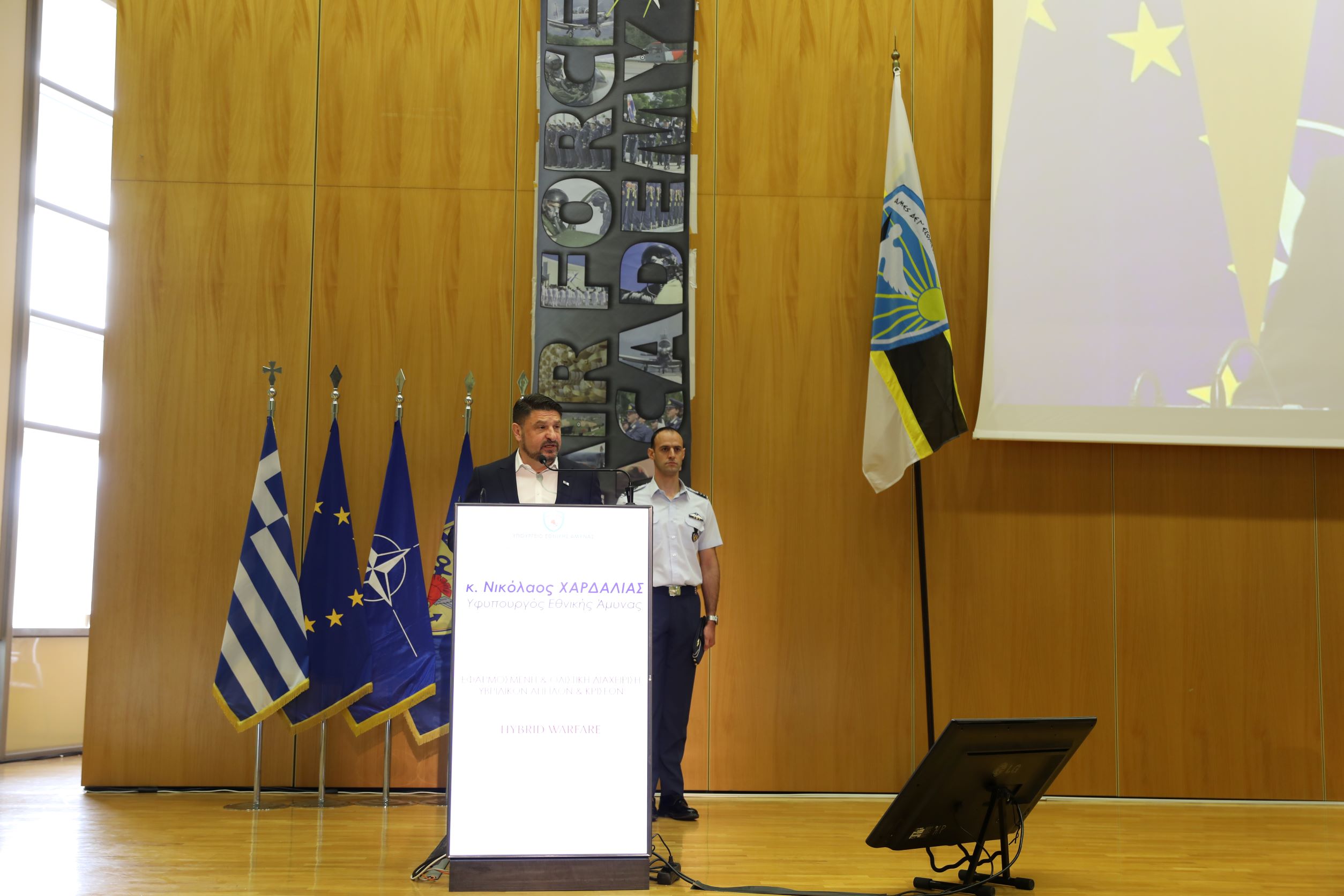
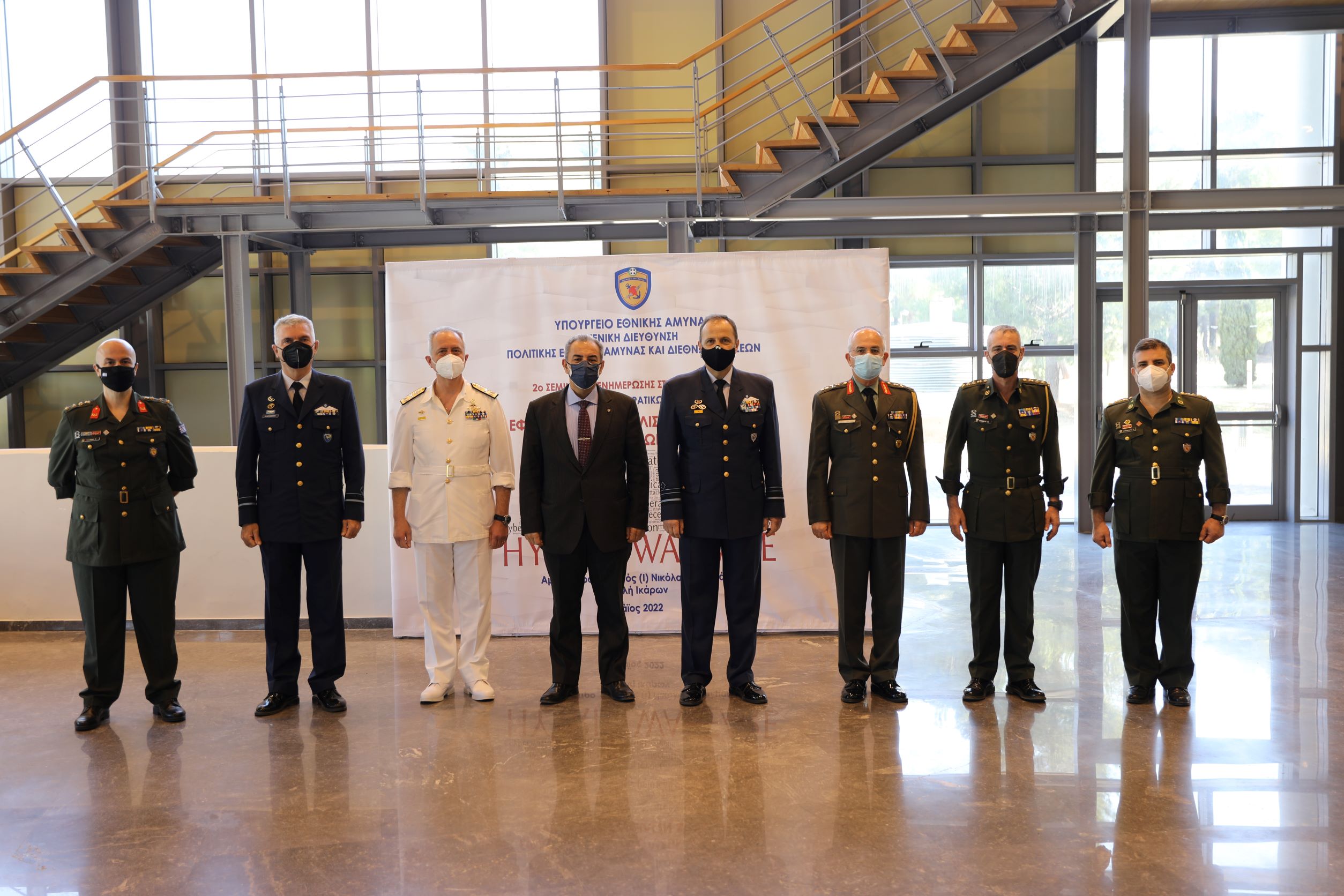
The proceedings of the 2nd Information Seminar of the Ministry of National Defence entitled: “Applied and Holistic Management of Hybrid Threats and Crises”, organised by the General Directorate of National Defence Policy and International Relations of the Ministry of National Defence, as part of its activities, were concluded with great success.
Specifically, during the two days of 02-03 June 2022, the fourth cycle of this seminar took place with practical training on a hybrid threat/crisis simulation scenario, as a culmination of the overall effort to comprehend the Hybrid Environment on the three levels: Physical, Digital and Cognitive.
The closure of the seminar was done by the General Director of National Defence Policy and International Relations of the Ministry of National Defence, Dr. Konstantinos P. Balomenos, who stressed the risk of perceptual distortions in the evaluation of hybrid threats, the value of the holistic approach and presented the conclusions of the Seminar.
In particular, some of the most important conclusions drawn from the seminar’s proceedings are the following:
All national power factors need to act together in order to counter hybrid threats. Cooperation and coordination between agencies and organisations will at the same time lead to resource savings, increased power and effectiveness on the ground. The use of this philosophy by the state apparatus can create a modern model of holistic management of hybrid threats/crises.
Managers of these crises are called upon to be able to fully understand the information environment. This will be achieved through a national analysis mechanism so that weaknesses and vulnerabilities can be identified, while monitoring the potential opponent will lead to situational awareness.
Deterring a hybrid actor, first of all, means to alert him that we know, we can, and we have the will to stop him. Again, if he proceeds to some hostile action, he should have to pay a great cost. Failure of deterrence carries the risk of leading to intimidation.
Preparedness for an effective response to a hybrid threat/crisis requires national resilience primarily at an intellectual level.
The weakness of a national strategy to counter hybrid threats/crises can be addressed by formulating a relevant doctrine, which will constitute the intellectual base of reference and the bridge for the future in the field of tackling the phenomenon.
The establishment of a hybrid threat observatory could be a step in the right direction, while also serving as a tool for assessing national efficiency in countering hybrid threats/crises.
Communication management of hybrid threats/crises needs a central communication channel through a national system that replicates the national message in order to be able to dominate the information environment aiming at an internal and international legitimacy and ultimately at the support of the national goal.
All the above are conditions required if we want to best support the executive power at the highest level, so that it can take the right decisions to better and more effectively counter hybrid threats/crises, with the ultimate objective to protect the national interests and security of the country.