
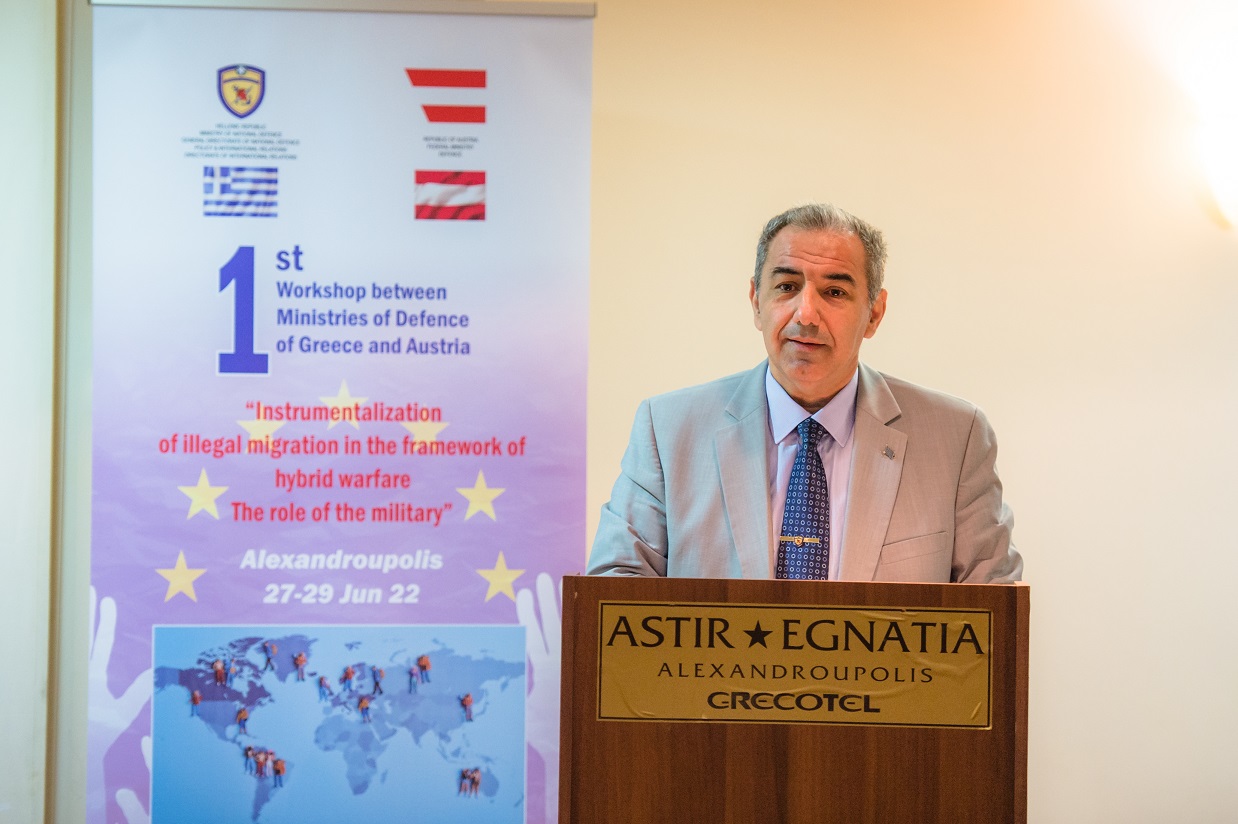
The General Directorate of National Defence Policy and International Relations of the Hellenic Ministry of National Defence, as part of its activities to strengthen the bilateral defence relations between Greece and Austria, in cooperation with the respective General Directorate of the Ministry of Defence of Austria, proceeded to the implementation of an action in order to highlight the problem of instrumentalisation of the migration issue.
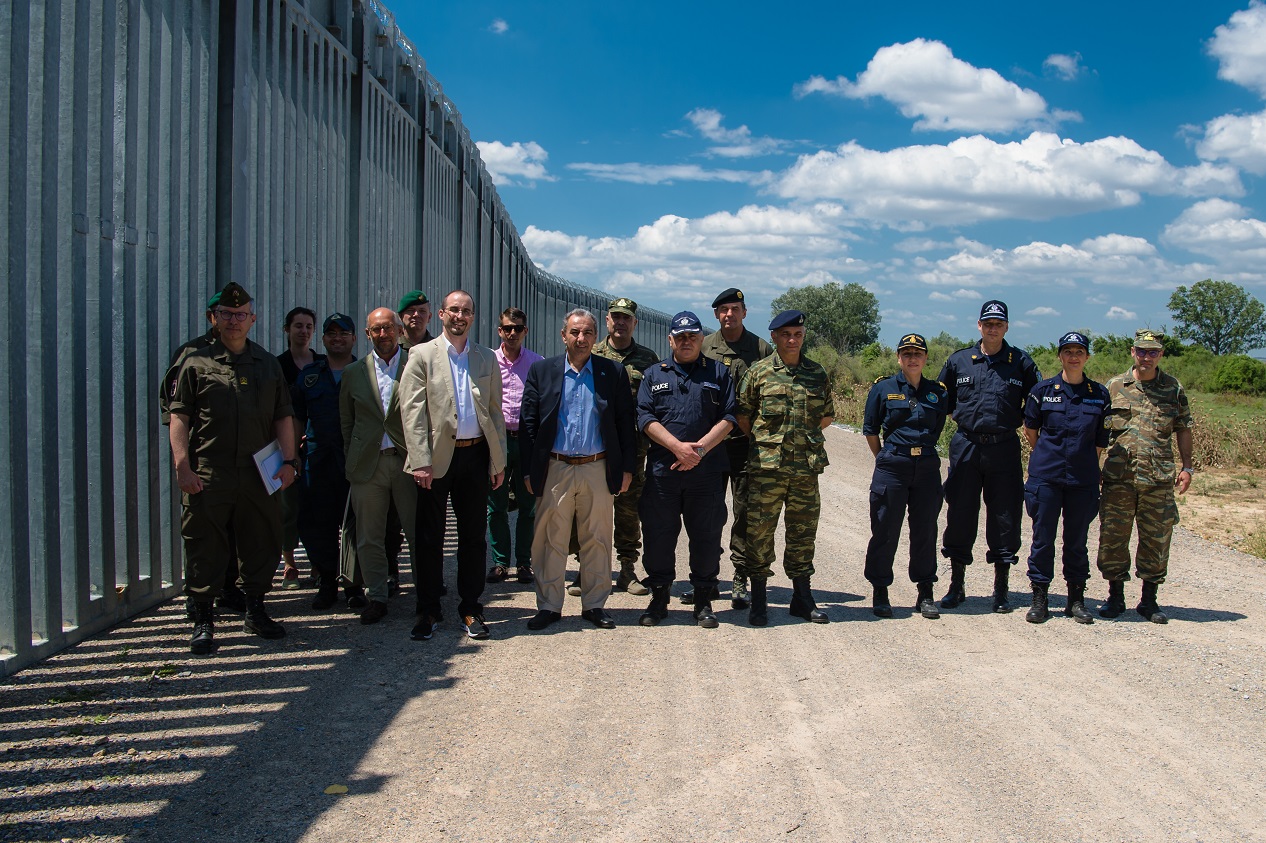
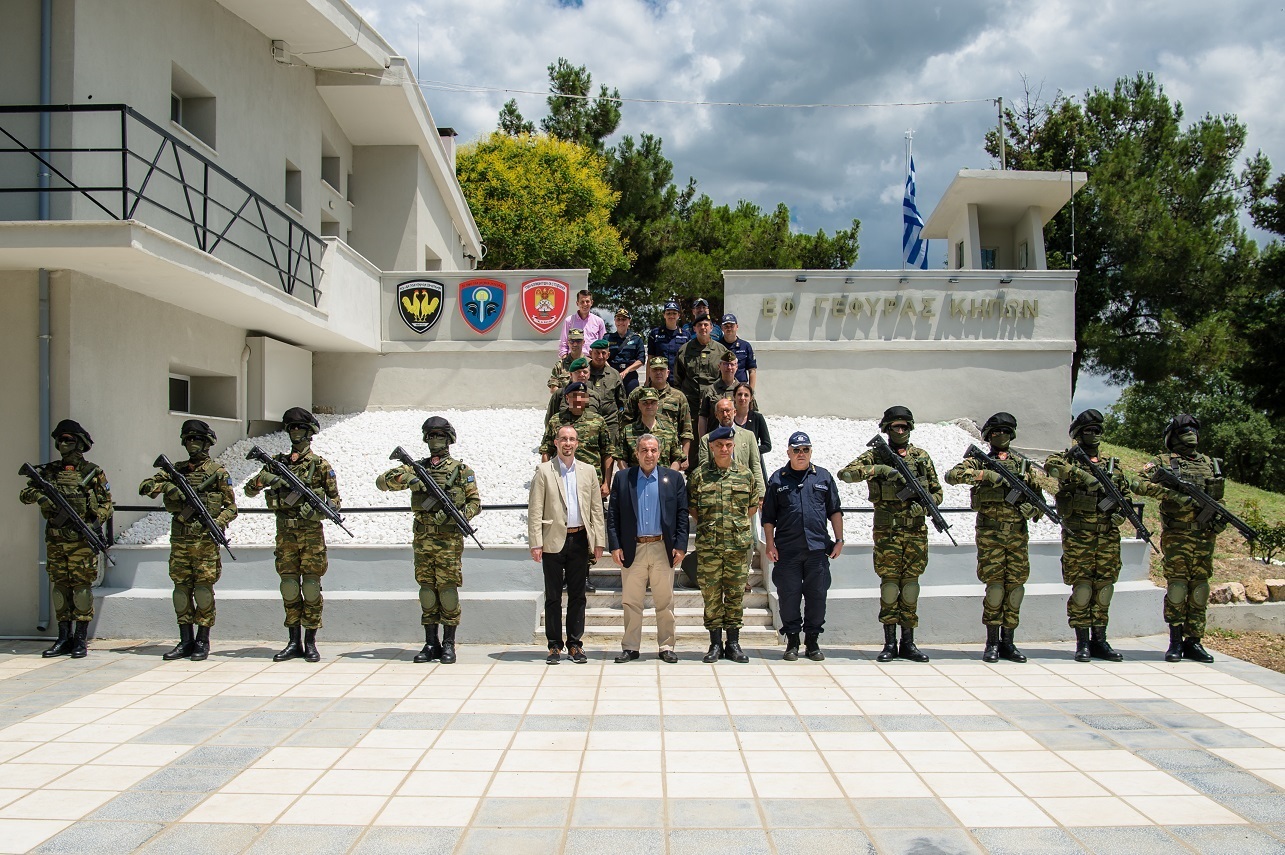
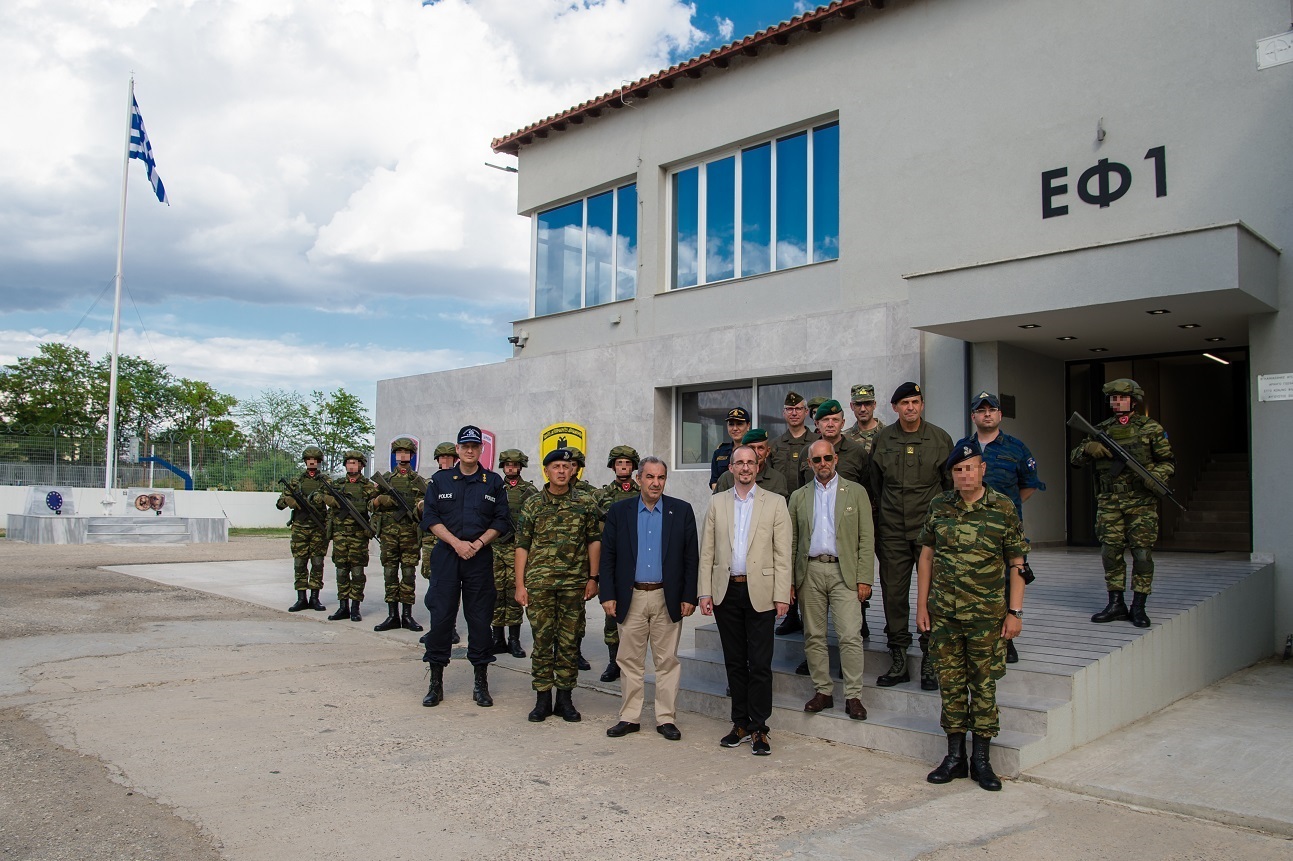
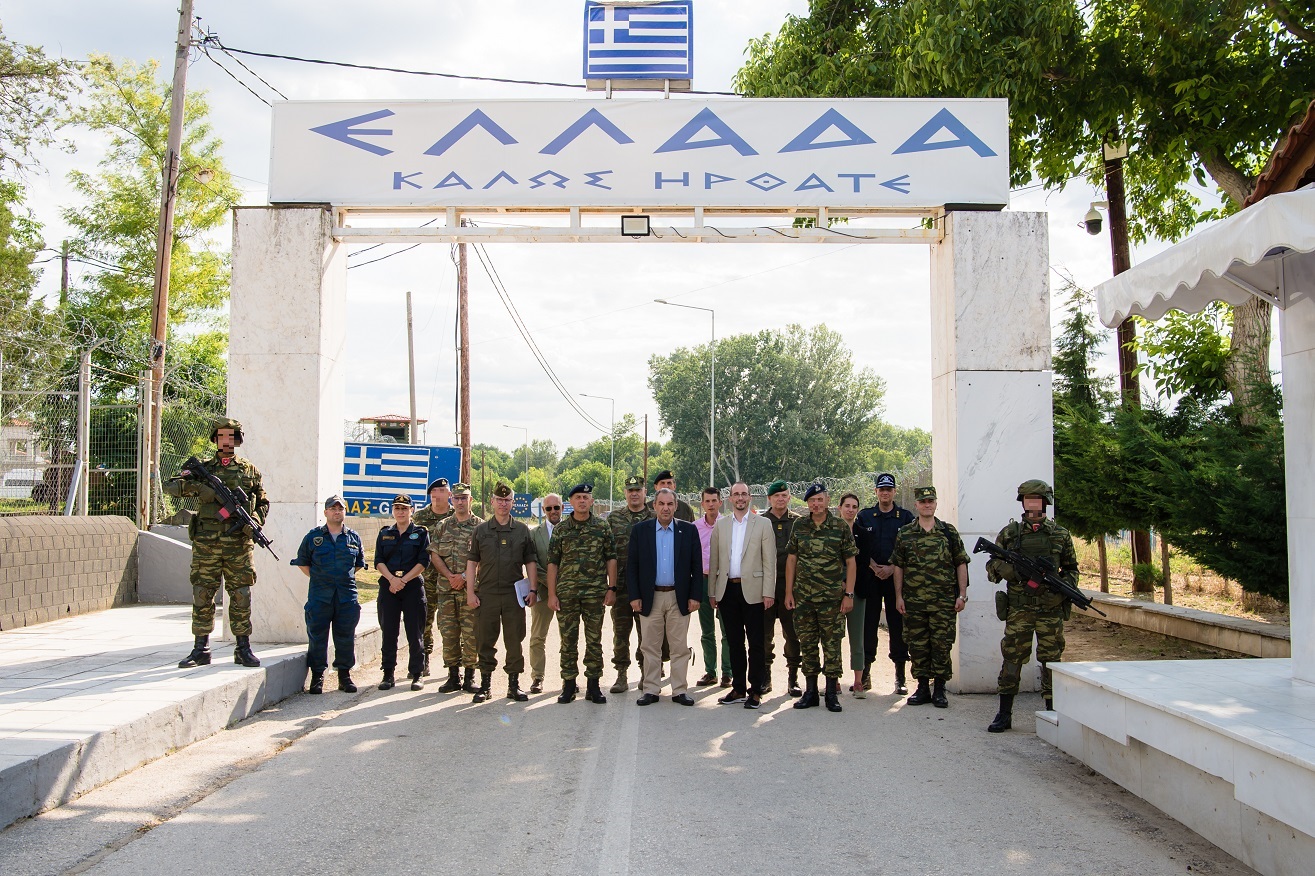
In particular, a delegation of officials from the two General Directorates, together with experts on the migration issue, made a series of visits to Units of the Armed Forces which played a key role in addressing the migration crisis of February – March 2020 in Evros river region, on Tuesday 28 June 2022, with a view to get information on this crisis and gain a full picture of the current situation on the operational field.
In particular, the two delegations visited:
• The headquarters of the XII Mechanised Infantry Division in Alexandroupolis.
• The Regional Center for Integrated Border Management and Migration in Alexandroupolis.
• The border fence in the area of Ferres – village of Poros, as well as the Border Guard Post at Kipous. At the same time, a meeting was held with Austrian representatives of FRONTEX, who are based in the region.
• The headquarters of the XVI Mechanised Infantry Division in Didymoteicho.
• The Unified Border Control Centre (EKEAS) in Nea Vissa.
• The checkpoint of Kastanies (“Border Inspection Post-1”) on the North-Eastern border with Turkey.
• The border fence in the area of Kastanies.
The same evening an official dinner was given in honor of the Austrian delegation, where the General Director of National Defence Policy and International Relations, Dr. Konstantinos Balomenos, and his counterpart Dr. Arnold Kammel exchanged views on the situation in Ukraine, the security environment in the Western Balkans and the Southeastern Mediterranean, as well as the further strengthening of bilateral relations between Greece and Austria in the defence sector.
On Wednesday 29 June 2022, an experts’ workshop was held in Alexandroupolis, entitled: “Instrumentalisation of the illegal migration in the framework of hybrid warfare. The role of the military”.
During its proceedings, an environmental analysis was carried out which recorded the current situation of the migration issue at European and international level. It also addressed the role of migration in relation to border security, the phenomenon of instrumentalisation of illegal immigration, the perception of the migration-refugee issue as a threat or challenge to European internal and external security, as well as the role that the Armed Forces have to play in managing the migration-refugee issue, both at present and in the near future.
The workshop was completed by drawing useful conclusions and proposals to highlight best practices to prevent and deter any attempt to instrumentalise the migration-refugee issue, as well as the role of the Armed Forces in managing this threat.
In particular, the conclusions reached are as follows:
• It needs to be made clear that the refugee-migration issue is a source of instability in the wider geostrategic environment of the Mediterranean and is directly linked to the internal and external security of each country. In particular, inefficient management of migration-refugee flows is likely to pose a threat to the national integrity of a State, cause violent conflicts, provoke economic instability and create internal instability due to lack of social cohesion (demographic instability, religious minorities, etc.).
• The instrumentalisation of migration has been recognised as a hybrid threat, and through it, a hybrid actor can exploit the vulnerabilities of an adversary target to manipulate its public opinion, undermine its social cohesion and discoordinate the functioning of its State.
• Linking migration to hybrid threats can still be related to criminal acts, such as human trafficking and smuggling.
• Under the above conditions, migration-refugee flows will increasingly be used by third countries as a source of diplomatic leverage. They will seek to promote their own political or economic agendas, leaving migrants to reach the European Union and consequently to Greece as a European border. They can therefore destabilise the regional system of the Eastern Mediterranean and the international system in general.
• Deterring a hybrid actor is intended to alert him that, we know, we can and we have the will to stop him. If he proceeds to some hostile action, he will be asked to pay a great cost. Failure of deterrence carries the risk of compulsion.
• Preparedness for an effective response to a hybrid threat/crisis requires national resilience both on a physical, digital and moral level.
• The lack of a national strategy to counter hybrid threats/crisis can be addressed by formulating a relevant doctrine, which will be the intellectual basis of reference, and the bridge for the future in the field of tackling the phenomenon.
• Communication management of hybrid threats/crisis requires a central communication channel.
In relation to the proposals made to strengthen the mechanism for managing and addressing the phenomenon of instrumentalisation of the migration issue, it was stressed that:
• The European Union and NATO need to proceed to a better coordination and a mutual reinforcement of their activities.
• The birth of a new form of political pressure through the instrumentalisation of migration-refugee flows, which is a kind of new hybrid war, requires particular sensitivity and responsibility from States, as well as measures to strengthen their resilience.
• The holistic approach to be applied in practice requires the involvement of the Armed Forces, the Security Forces (Police and Coast Guard), as well as all national forces, taking into account the differences between the political and military roles and their mission. This requires making use of all available national resources, ensuring more effective coordination, avoiding duplication in order to save resources and using every specialised national capability. Gaps between processes and functions are identified, initiatives are welcome and situational awareness is ensured.
• The Armed Forces will continue to play an active role in managing the migration-refugee issue because they have the capacity to manage large-scale movements of refugees requiring sufficient logistical infrastructure to prevent possible violence and chaos. The Military Personnel also has all the organizational and other capabilities that are often not available to other government agencies, even those that work directly with migrants.
Military units, because they are able to create a controlled and organised response to an emergency within a few days or hours, must play an active role in managing the phenomenon of instrumentalisation of the migration issue.
• In the same context, professional military forces are required to have their own medical, legal and social personnel who are accustomed to dealing with chaotic and unpredictable situations.
• Further, military forces can be effective in deterrence operations involving actions for which they are often trained.
This initiative will continue in September of this year in Vienna, with the organisation of another expert workshop entitled: “Instrumentalisation of the illegal migration in the framework of hybrid warfare. The role of the military”.
The conclusions of the two expert workshops will be presented at an international conference to be held in Vienna next November.