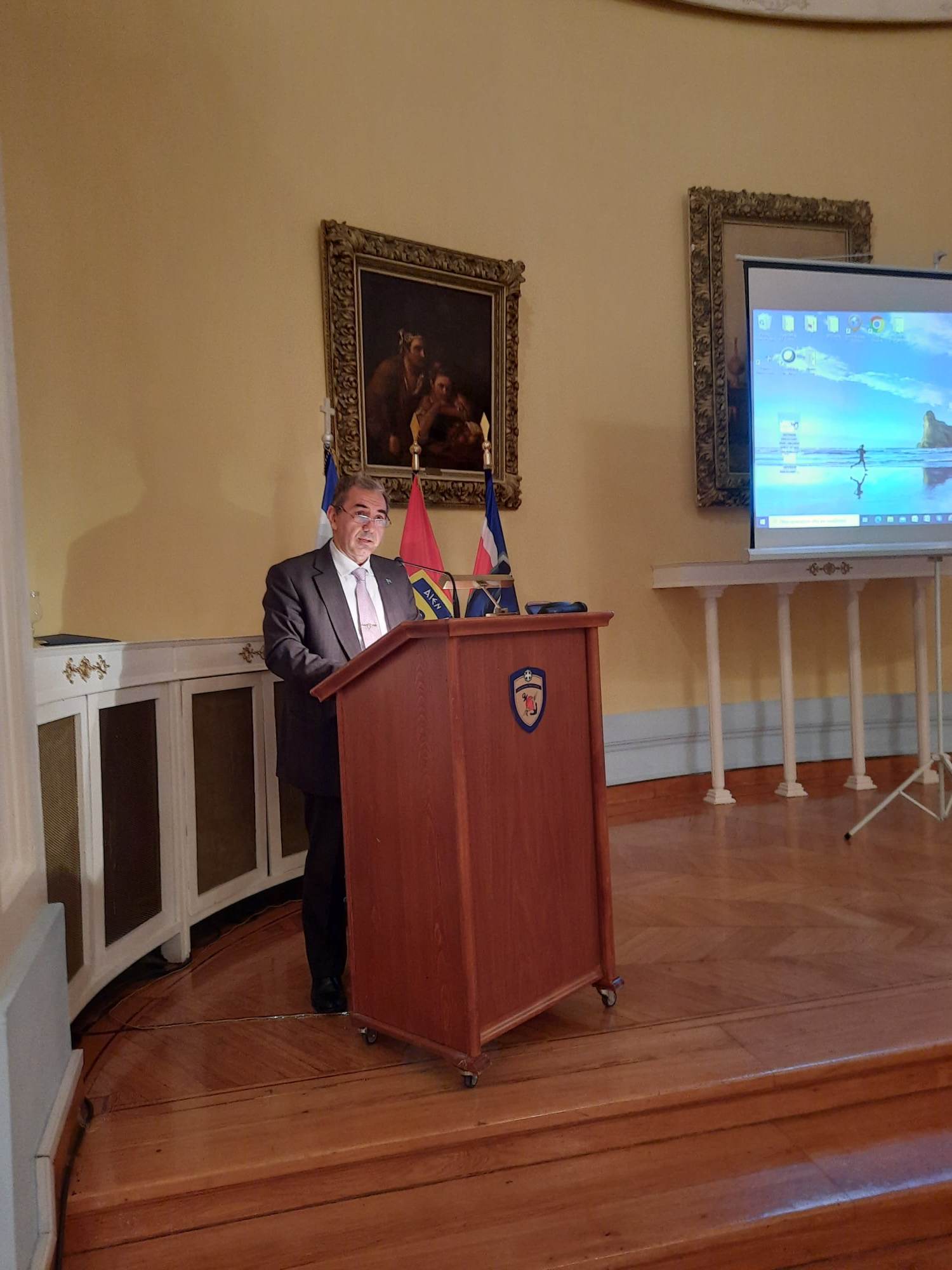
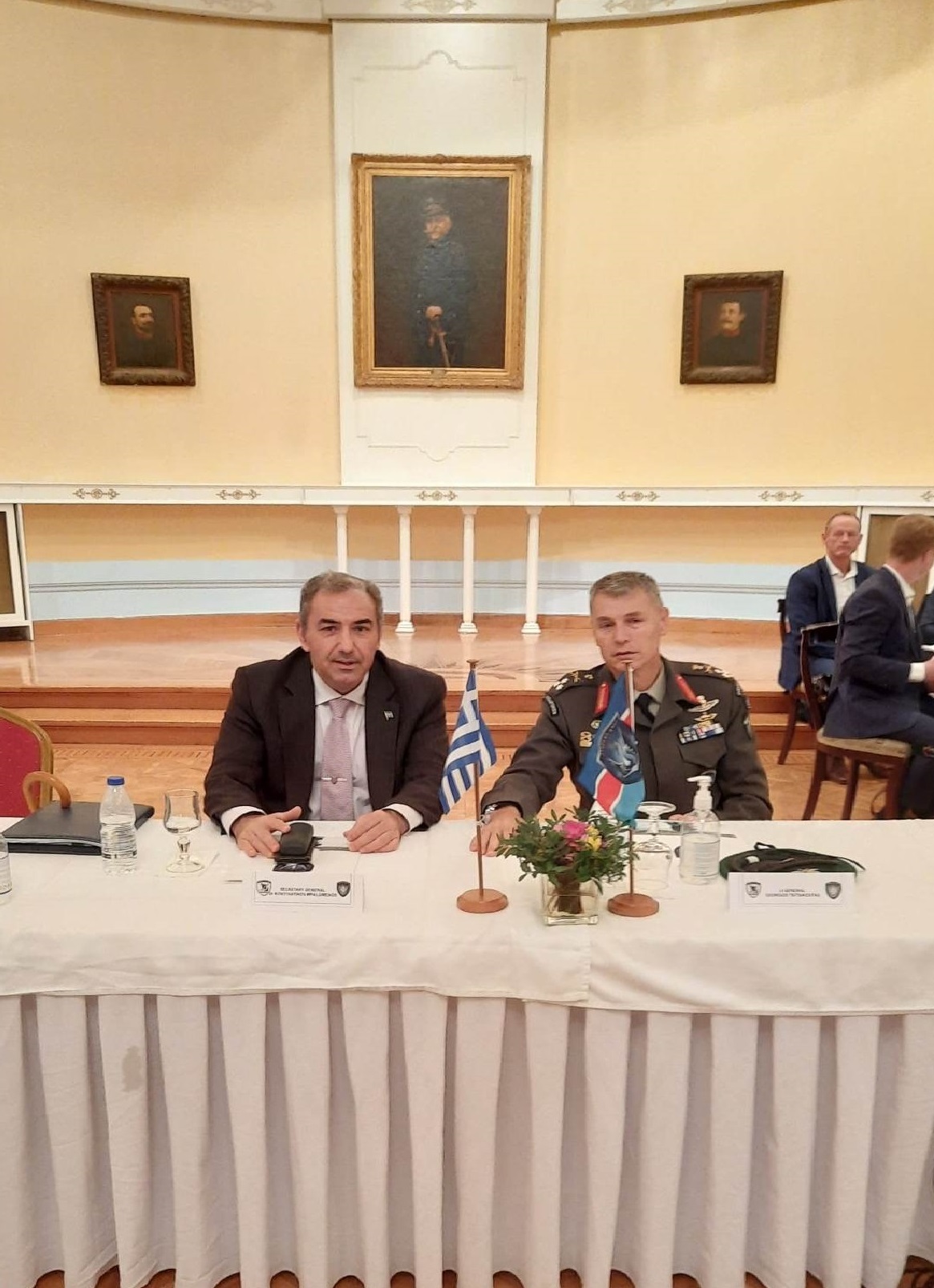
The General Director of National Defence Policy and International Relations of the Ministry of National Defence Dr. Konstantinos Balomenos, following the honorary invitation of the Commander of the Special Warfare Command of the Hellenic National Defence General Staff, Lieutenant General Georgios Tsitsikostas, on Wednesday November 30, 2022, participated as a keynote speaker in the Table-Top Exercise (TTX), organised by that Command.
The exercise took place from Wednesday 30 November 2022 to Thursday 01 December 2022 under the auspices of NATO Special Operations Headquarters at the Armed Forces Officers Club (LAED).
Apart from specialised military personnel of all branches of the Armed Forces, representatives of the Ministries of Foreign Affairs, Civil Protection, Interior, Digital Governance, Maritime Affairs and Insular Policy, Climate Crisis and Civil Protection, as well as the National Intelligence Service (NIS) participated in the exercise.
At the beginning of the exercise, the Commander of the Special Warfare Command of the HNDGS, Lieutenant General Georgios Tsitsikostas, made an address, and then, the General Director of National Defence Policy and International Relations of the Ministry of National Defence Dr. Konstantinos Balomenos took the floor and made an extensive reference to the national context of dealing with Hybrid Threats through a national holistic plan.
In particular, the General Director:
• Referred to the security environment of the South-Eastern Mediterranean and identified its main threats and challenges. In that context, he stated that Türkiye is the main destabilising factor in the Eastern Mediterranean. It refuses to impose sanctions on Russia like all other NATO allies, cooperates openly with Russia, acquires Russian military equipment with dangerous consequences for the Alliance’s security and poses a threat to the interests of the Alliance because it acts as Russia’s “Trojan Horse” within NATO.
• He referred to the issue of illegal migration and focused on the instrumentalisation of migrants on the part of Türkiye, a phenomenon which acts as a hybrid threat to Greece and the European Union.
• He presented the theoretical framework of the Hybrid Warfare and focused on the vulnerabilities (political/economic/social instability within a state, energy and defence dependency, national security problems, etc.) of the opponent, which uses a hybrid actor to implement his strategy. In this light, he stressed the necessity of situational awareness in these critical areas, as well as assessing and taking measures to improve the functioning of the state. He also made extensive reference to the intellectual (cognitive) field of action of hybrid warfare and in particular to the influence of social media in shaping the consciousness and behaviour of public opinion.
• He presented the National Crisis Management Mechanism and the NATO Crisis Management Mechanism and then proceeded with a comparative analysis of the two mechanisms. He also stressed the need for civil-military cooperation.
• Finally, he highlighted the importance of resilience in countering hybrid threats through integrated defence based on the holistic crisis management model ‘Whole of Government Approach’ and the participation of the whole society ‘Whole of Society Approach’. In addition, he highlighted the value of developing a common culture in countering hybrid threats, as well as the need for further cooperation between the public and private sectors and the exploitation of all national power stakeholders.